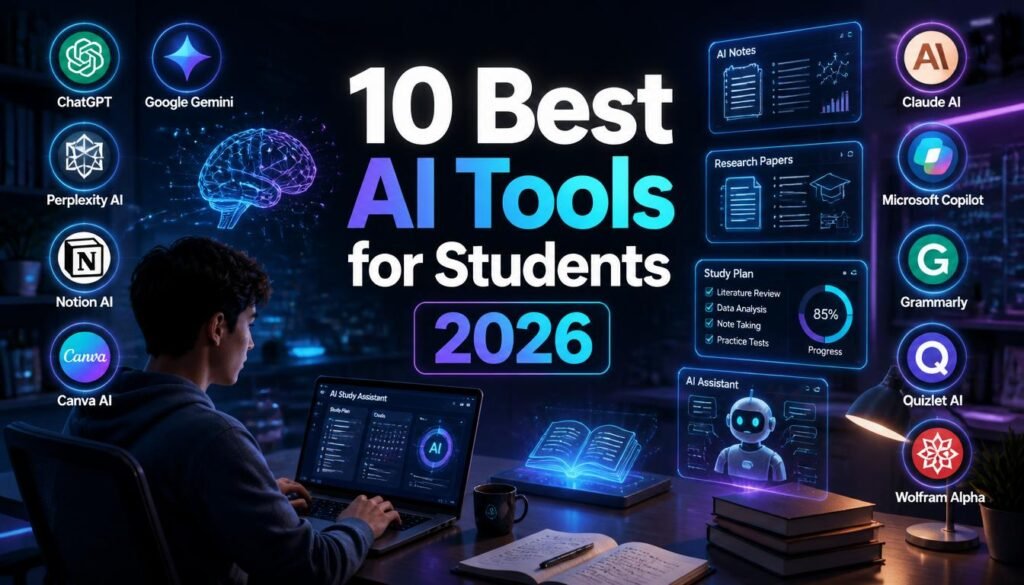
📝 Introduction
Artificial intelligence has become a practical study companion for students. In 2026, AI can help with difficult concepts, research, notes, assignments, presentations, coding, mathematics, and exam preparation.
The challenge is choosing the right tool. Some platforms are better at writing and explanations, while others focus on research, organization, design, or problem-solving.
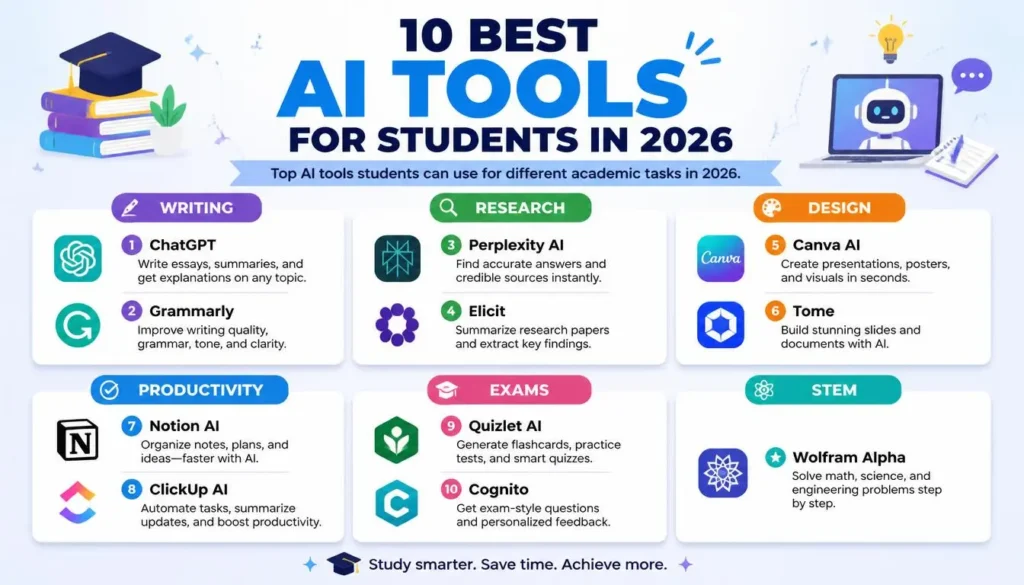
This guide compares 10 AI tools for students, focusing on their strengths, limitations, pricing, and best use cases. The goal is not to replace studying with AI, but to help students learn more efficiently and use these tools responsibly.
⚠️ Educational Disclaimer: AI tools are designed to support learning, not replace independent study. Always verify important information and follow your school’s or university’s academic-integrity policies.
What Should Students Look for in an AI Tool?
Before choosing an AI platform, consider these factors:
- Accuracy: AI can make mistakes, so verify important facts.
- Ease of use: A simple interface saves time.
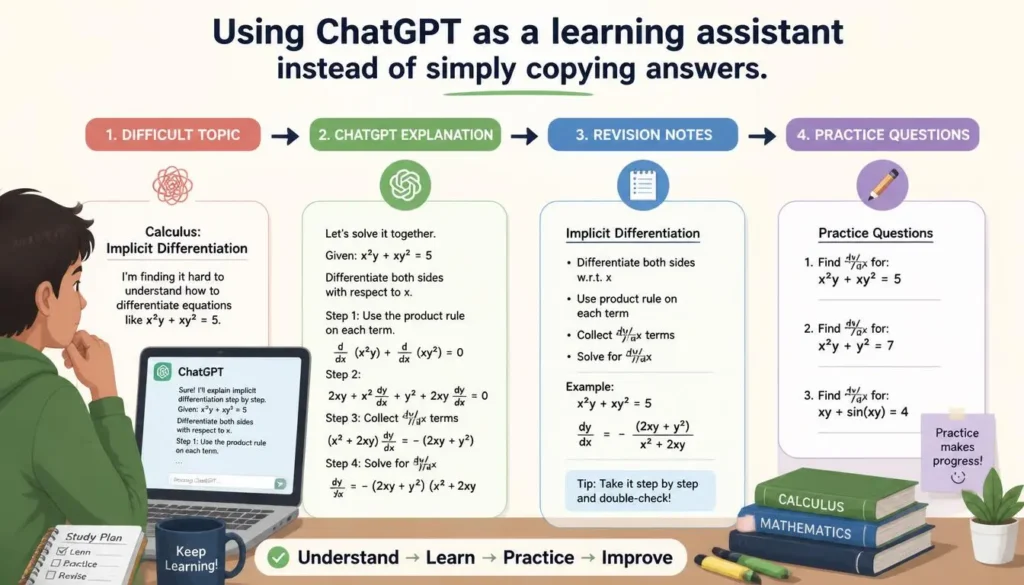
- Learning support: Prefer tools that explain concepts instead of only giving answers.
- Affordability: Start with free plans before paying.
- Privacy: Check policies before uploading personal notes or assignments.
1. ChatGPT
Best for: Learning, writing, coding, brainstorming, and homework support.
ChatGPT is a versatile AI assistant that can explain difficult topics, create study notes, brainstorm ideas, summarize material, and help with programming.
Pros: Strong explanations, broad subject support, writing and coding assistance.
Cons: Answers should be verified; advanced features may require a paid plan.
Pricing: Free plan available, with paid options offering additional features and higher limits.
2. Google Gemini
Best for: Research, Google Workspace, and productivity.
Gemini works well for students already using Gmail, Docs, Sheets, and Drive. It can summarize documents, organize information, support research, and help plan study tasks.
Pros: Strong Google integration, collaboration, research support.
Cons: Some advanced features require payment.
3. Perplexity AI
Best for: Research and finding sources.
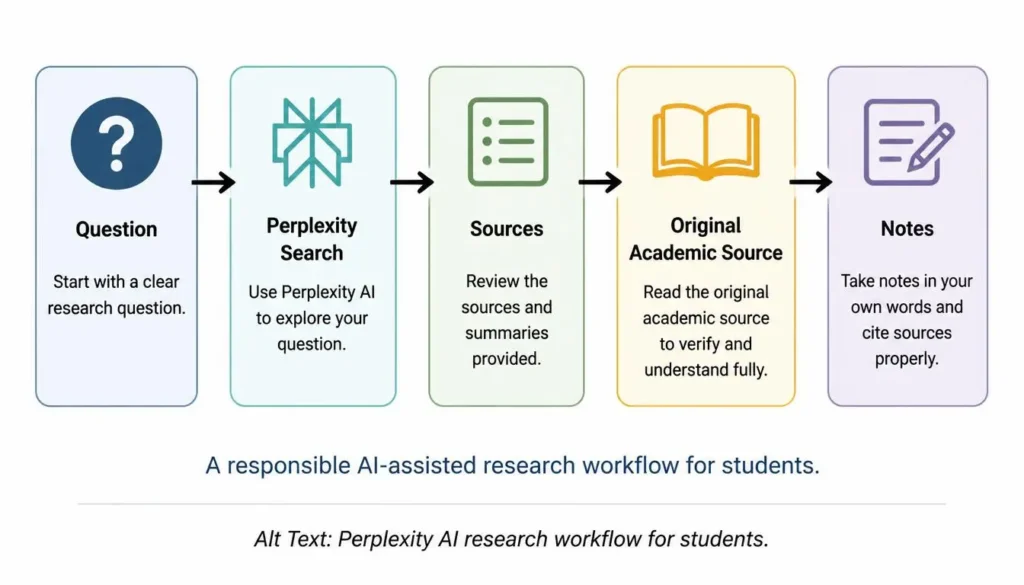
Perplexity combines conversational AI with search, helping students explore topics and find supporting sources quickly.
Pros: Research-focused, source references, fast summaries.
Cons: Sources still need to be checked; it is less suited to creative work.
4. Notion AI
Best for: Notes, organization, and study planning.
Notion AI adds AI features to a workspace for notes, tasks, documents, and projects. Students can organize lectures, assignments, revision plans, and study material.
Pros: Strong organization and productivity.
Cons: Takes time to learn; full AI functionality may require payment.
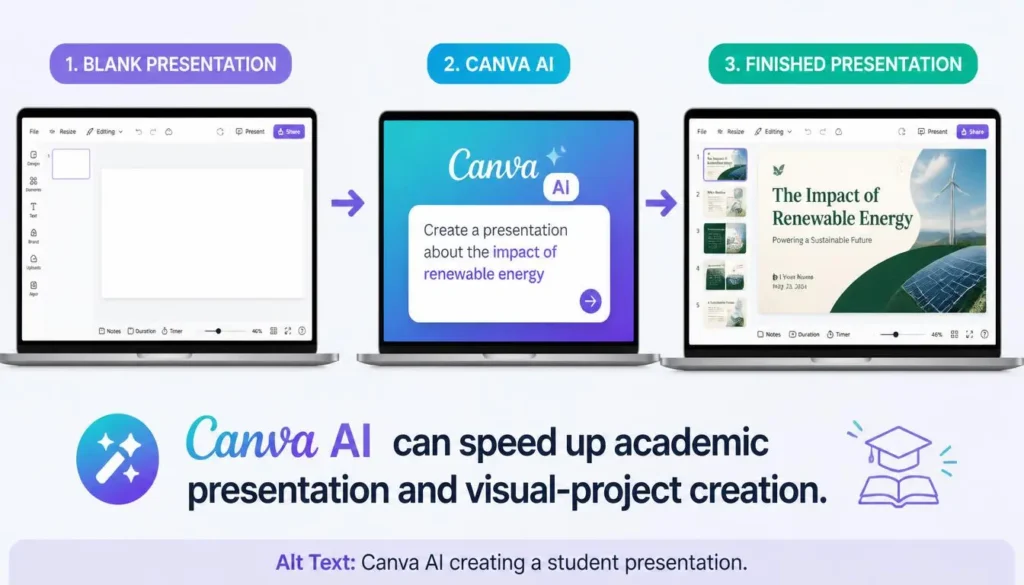
5. Canva AI
Best for: Presentations, posters, infographics, and visual projects.
Canva combines AI tools with templates and a drag-and-drop editor, making academic design easier for beginners.
Pros: Easy to use, many templates, fast project creation.
Cons: Some premium assets require a subscription.
6. Claude AI
Best for: Long documents, explanations, writing, and research assistance.
Claude is useful for lengthy articles, notes, and assignments. Students can ask it to summarize material, explain difficult passages, or improve writing.
Pros: Strong long-document analysis and clear responses.
Cons: Some advanced features require payment; it is not primarily an image tool.
7. Grammarly AI
Best for: Grammar, proofreading, and academic writing.
Grammarly helps improve grammar, spelling, clarity, tone, and sentence structure. It is useful for polishing essays, reports, and emails.
Pros: Easy to use and strong writing support.
Cons: Advanced features are limited on free access; it is not a research tool.
8. Microsoft Copilot
Best for: Microsoft 365 productivity.
Copilot can assist with Word, PowerPoint, Excel, Outlook, and other Microsoft workflows. Students can draft reports, create presentations, summarize documents, and work with data.
Pros: Excellent Microsoft integration.
Cons: Best experience depends on Microsoft 365 access.
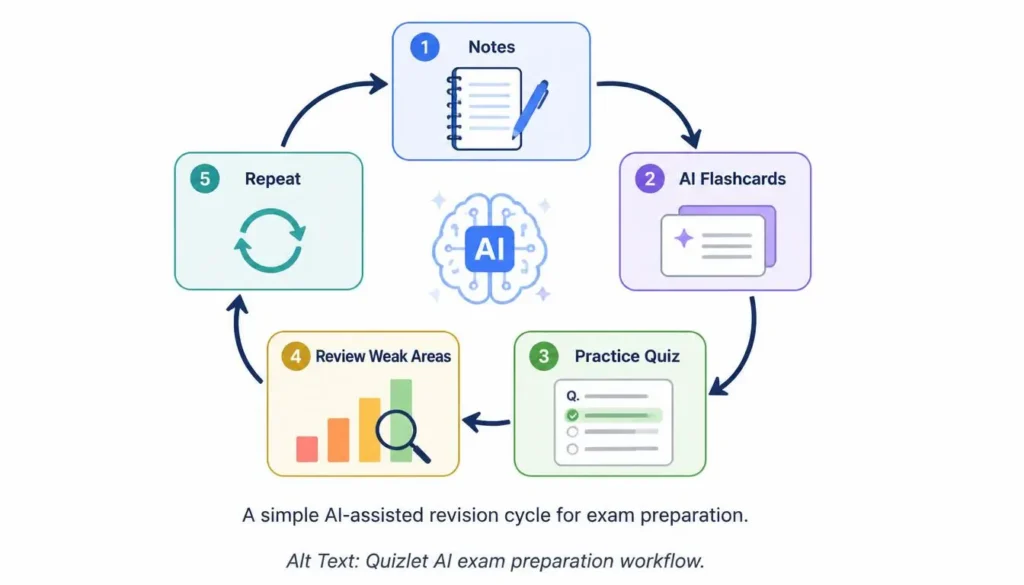
9. Quizlet AI
Best for: Flashcards and exam preparation.
Quizlet helps students review material with flashcards, quizzes, and interactive study sessions.
Pros: Good for revision and memorization.
Cons: Less suitable for deep explanations; some features are paid.
10. Wolfram Alpha
Best for: Mathematics, science, and technical subjects.
Wolfram Alpha is particularly useful for calculations, equations, graphs, and scientific problems. It can help students check their work and understand mathematical solutions.
Pros: Strong STEM capabilities and calculations.
Cons: Less useful outside technical subjects.
AI Tools Comparison Table
| AI Tool | Best For | Free Plan |
|---|---|---|
| ChatGPT | Learning, writing, coding | Yes |
| Gemini | Research, productivity | Yes |
| Perplexity | Research | Yes |
| Notion AI | Notes, organization | Limited |
| Canva AI | Design | Yes |
| Claude | Long documents | Yes |
| Grammarly AI | Writing | Yes |
| Copilot | Microsoft productivity | Limited |
| Quizlet AI | Exams | Yes |
| Wolfram Alpha | Mathematics | Yes |
Best AI Tools by Student Need
| Need | Recommended Tool |
|---|---|
| Writing | ChatGPT / Grammarly |
| Research | Perplexity |
| Math & STEM | Wolfram Alpha |
| Notes | Notion AI |
| Presentations | Canva AI |
| Exam Revision | Quizlet AI |
| Microsoft Users | Copilot |
| Long Documents | Claude |
💡 Pro Tip
Don’t use AI simply to generate answers and submit them. Ask it to explain concepts, create practice questions, identify weaknesses, or review your work. This keeps AI in the role of a learning assistant rather than replacing your own thinking.
Free vs. Paid AI Tools
Free plans are usually enough for occasional studying, basic writing, research, and simple projects.
Paid plans become more useful when you use AI daily, work with larger files, need advanced features, or require higher usage limits.
For most students, starting with free plans and upgrading only when necessary is the most practical approach.
Frequently Asked Questions
What is the best AI tool for students in 2026?
ChatGPT is one of the strongest all-around choices because it supports learning, writing, coding, and brainstorming.
Which AI tool is best for research?
Perplexity is a strong choice for exploring topics and finding supporting sources.
Which AI tool is best for math?
Wolfram Alpha is especially useful for mathematics, engineering, and scientific calculations.
Can students use AI for assignments?
That depends on the school’s or university’s policy. Students should follow academic-integrity rules and disclose AI use when required.
Are paid AI tools worth it?
They can be worthwhile for students who use AI frequently, but casual users may be fine with free plans.
Final Verdict
There is no single AI tool that is best for every student. ChatGPT is the strongest all-around option, while Perplexity is better suited to research, Wolfram Alpha to STEM work, Canva AI to presentations, Quizlet AI to revision, and Notion AI to organization.
The smartest approach is to match the tool to the task. Use AI to understand concepts, organize study material, practice skills, and improve your work—but continue verifying information and doing the thinking yourself.
Our Recommendations
- Best Overall: ChatGPT
- Best for Research: Perplexity
- Best for Writing: Grammarly AI
- Best for Math: Wolfram Alpha
- Best for Presentations: Canva AI
- Best for Exam Revision: Quizlet AI
- Best for Organization: Notion AI
Use AI the Right Way
AI can help you study faster, but it should support your learning—not replace it. Use AI to understand difficult topics, create practice questions, summarize notes, and improve your writing. Always check important information and follow your school’s AI guidelines.
✍️ About the Author
Written by the NestAIHub Editorial Team, covering AI tools, technology, productivity software, and digital learning workflows.

0 Comments