Introduction
Artificial intelligence is no longer limited to researchers and large technology companies. In 2026, AI is becoming part of everyday work, education, business, search, content creation, and cybersecurity.
The technology is evolving quickly, with new models and applications changing how people learn, communicate, and complete tasks. Understanding these developments can help students, professionals, creators, and business owners identify new opportunities and prepare for changes ahead.
This guide covers the 10 most important AI trends in 2026, what they mean, where they are being used, and why they matter for the future.
Executive Summary
| AI Trend | Main Impact | Who Benefits |
|---|---|---|
| AI Agents | Task automation | Businesses, professionals |
| Generative AI | Faster content creation | Creators, marketers |
| AI Assistants | Better productivity | Everyone |
| Business Automation | Lower repetitive workload | Businesses |
| AI Search | Faster research | Students, professionals |
| AI Video | Easier video production | Creators |
| Multimodal AI | More natural interaction | Everyone |
| AI Education | Personalized learning | Students, teachers |
| AI Cybersecurity | Faster threat detection | Organizations |
| Small AI Models | Privacy and speed | All users |
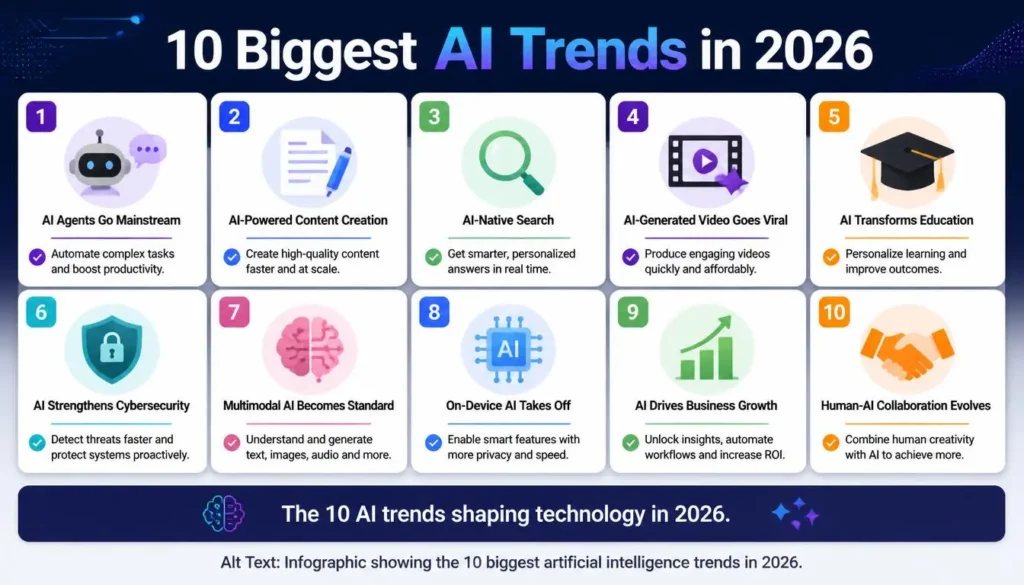
1. AI Agents and Autonomous Systems
One of the biggest developments is the rise of AI agents. Unlike traditional chatbots that mainly answer questions, agents can plan multiple steps, use software tools, make decisions, and complete workflows with less human involvement.
For example, an agent could research a topic, collect information, prepare a report, create charts, and organize follow-up tasks.
Businesses are exploring agents for customer support, research, scheduling, data analysis, project management, and software testing. As these systems become more capable, they may function more like digital coworkers than simple assistants.
2. Generative AI Keeps Expanding
Generative AI can create text, images, videos, audio, presentations, and code from simple instructions.
Modern systems are becoming better at understanding tone, formatting, context, and audience requirements. Businesses already use generative AI for marketing campaigns, product descriptions, training materials, websites, and software development.
The biggest change is accessibility: people can now create useful content without advanced technical skills.
3. AI Assistants Are Becoming Smarter
AI assistants are moving beyond basic question answering. They can help users plan schedules, summarize meetings, draft emails, analyze spreadsheets, organize projects, and explain difficult topics.
Students can use them for learning, professionals for reports, marketers for campaign ideas, and developers for coding support.
The long-term direction is more personalized assistants that understand context and user preferences while maintaining appropriate privacy controls.
Internal Link Opportunity: Add a natural link to your relevant AI productivity tools article here.
4. AI Business Automation
AI automation is no longer limited to large corporations. Small businesses, startups, and freelancers can also use AI to handle repetitive processes.
Common examples include:
- Data entry
- Invoice processing
- Scheduling
- Inventory tracking
- Report generation
- Customer support
- Marketing tasks
By automating routine work, employees can spend more time on creative and strategic activities.
5. AI-Powered Search
Search is becoming more conversational. Instead of entering short keywords and opening multiple pages, users can ask complete questions and receive organized answers.
AI-powered search can summarize topics, compare information, find research papers, explain technical concepts, and answer follow-up questions.
This is particularly valuable for students, researchers, writers, and professionals who need to find and understand information quickly.
6. AI Video Generation
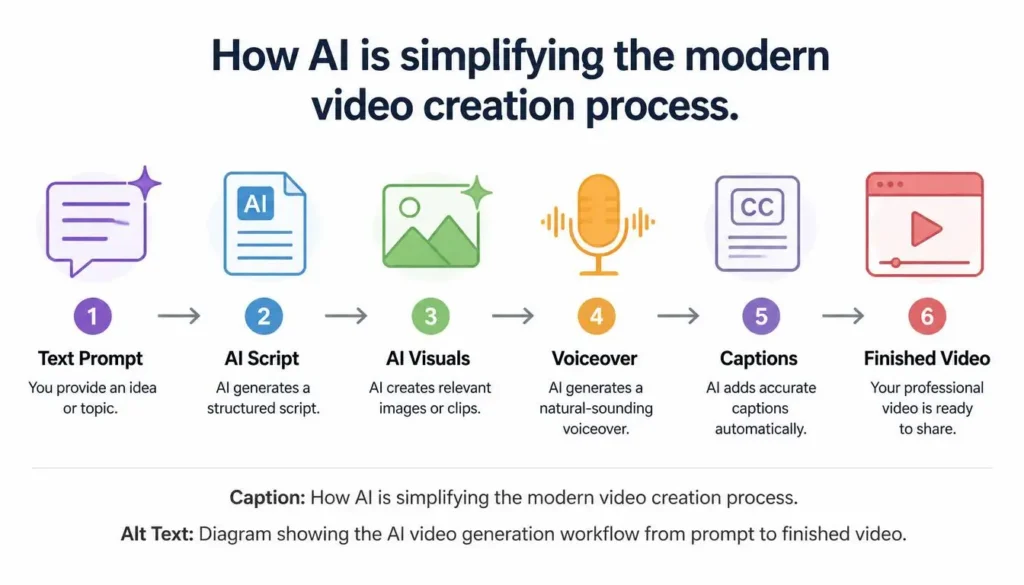
AI video tools are making video creation faster and more accessible. Users can generate short videos, educational content, social media clips, voiceovers, and subtitles from relatively simple instructions.
For content creators, educators, and businesses, this can reduce the time and resources traditionally required for video production.
7. Multimodal AI
Multimodal AI can work with multiple types of information, including text, images, audio, video, and documents.
For example, a student could upload a diagram, ask a question using voice, and receive a written explanation. This makes AI more useful for education, customer support, and professional workflows.
8. AI in Education
AI is helping make learning more personalized. Modern education tools can provide personalized study plans, instant feedback, AI tutoring, language practice, quizzes, and homework assistance.
The goal isn’t necessarily to replace teachers. Instead, AI can act as an additional learning assistant that helps students study at their own pace.
Internal Link Opportunity: Link AI tools for students to your relevant NestAIHub education article.
9. AI Cybersecurity
As cyber threats become more sophisticated, AI is being used to detect suspicious behavior, identify malware, monitor networks, and respond to threats.
AI can analyze huge amounts of data quickly, helping organizations identify potential security problems earlier.
10. Smaller AI Models on Personal Devices
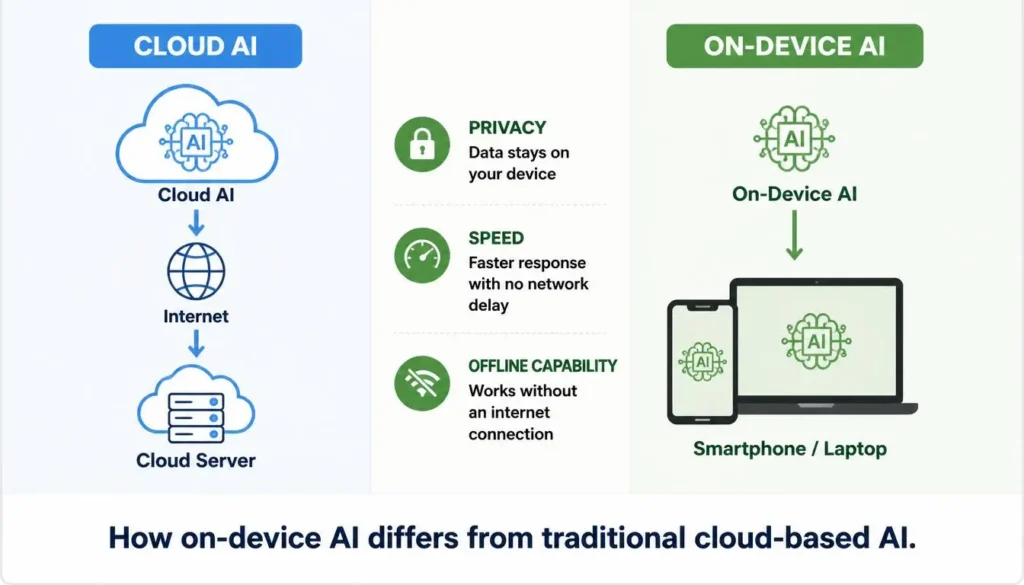
Another important trend is the growth of smaller AI models that can run directly on smartphones, laptops, and other devices.
Instead of sending every request to cloud servers, some AI tasks can happen locally. Potential benefits include better privacy, faster responses, offline capabilities, and lower cloud dependence.
AI Trends Comparison
| Trend | Main Benefit | Major Users |
|---|---|---|
| AI Agents | Workflow automation | Businesses |
| Generative AI | Content creation | Creators |
| AI Search | Faster research | Students |
| AI Video | Easier production | Creators |
| Multimodal AI | Flexible interaction | Everyone |
| AI Education | Personalized learning | Students |
| AI Cybersecurity | Threat detection | Organizations |
| Small AI Models | Privacy and speed | Consumers |
How AI Will Affect Different Industries
AI is already influencing education, healthcare, business, marketing, entertainment, and finance. Organizations can automate routine work, improve customer service, analyze data, personalize experiences, and support faster decisions.
The biggest benefits include higher productivity, reduced repetitive work, faster innovation, personalized services, and new AI-related career opportunities.
Challenges of the AI Future
AI also brings important concerns. Privacy, accuracy, job transformation, bias, transparency, and accountability will remain major issues.
AI can still make mistakes, so human review is especially important in high-stakes situations. At the same time, automation may change some jobs while creating new opportunities in AI development, oversight, and digital skills.
💡 Pro Tip: Don’t focus only on learning individual AI tools. Build transferable skills such as prompt writing, digital literacy, critical thinking, communication, and problem-solving. These skills remain valuable as specific AI platforms change.
Frequently Asked Questions (FAQs)
What are the biggest AI trends in 2026?
AI agents, generative AI, multimodal systems, AI search, video generation, business automation, AI education, cybersecurity, and personal AI models are among the major trends.
Will AI replace humans?
AI is more likely to automate repetitive tasks than completely replace people. Creativity, judgment, communication, and decision-making remain important human skills.
What are AI agents?
AI agents are systems that can plan, make decisions, use tools, and complete multi-step tasks with limited human supervision.
Is AI important to learn?
Yes. AI skills are becoming increasingly useful for students, professionals, entrepreneurs, and anyone working in a technology-driven environment.
Final Verdict
The biggest AI trends of 2026 show that artificial intelligence is becoming more autonomous, multimodal, personalized, and deeply integrated into everyday life.
From AI agents and generative tools to smarter search, personalized education, cybersecurity, and on-device models, these technologies are changing how people work, learn, create, and solve problems.
You don’t need to become a programmer to prepare. Start by learning how AI works, practicing with useful tools, following reliable updates, and strengthening your human skills.
The future of AI isn’t simply about smarter machines. It’s about people learning to use those machines intelligently.
What AI Trends Really Mean for You
AI is changing quickly, but not every new trend will be useful for everyone. In 2026, the biggest shift is from AI that simply answers questions to AI that can reason, use tools, and complete multi-step tasks.
Our advice: Don’t follow an AI trend just because it is popular. Look at how it can actually help you save time, learn something, create better work, or solve a real problem. AI is becoming more powerful, but human judgment is still important.
About the Author
✍️ About the Author: Written by the NestAIHub Editorial Team, technology researchers and content editors covering AI tools, emerging technology, education, and digital productivity. 🧠
1 Comment
10 Best AI Tools for Customer Support in 2026 - NestAIHub · August 25, 2026 at 12:34 am
[…] For more practical business AI strategies, read our guides on how businesses can use AI to save time and AI trends to watch in 2026. […]